


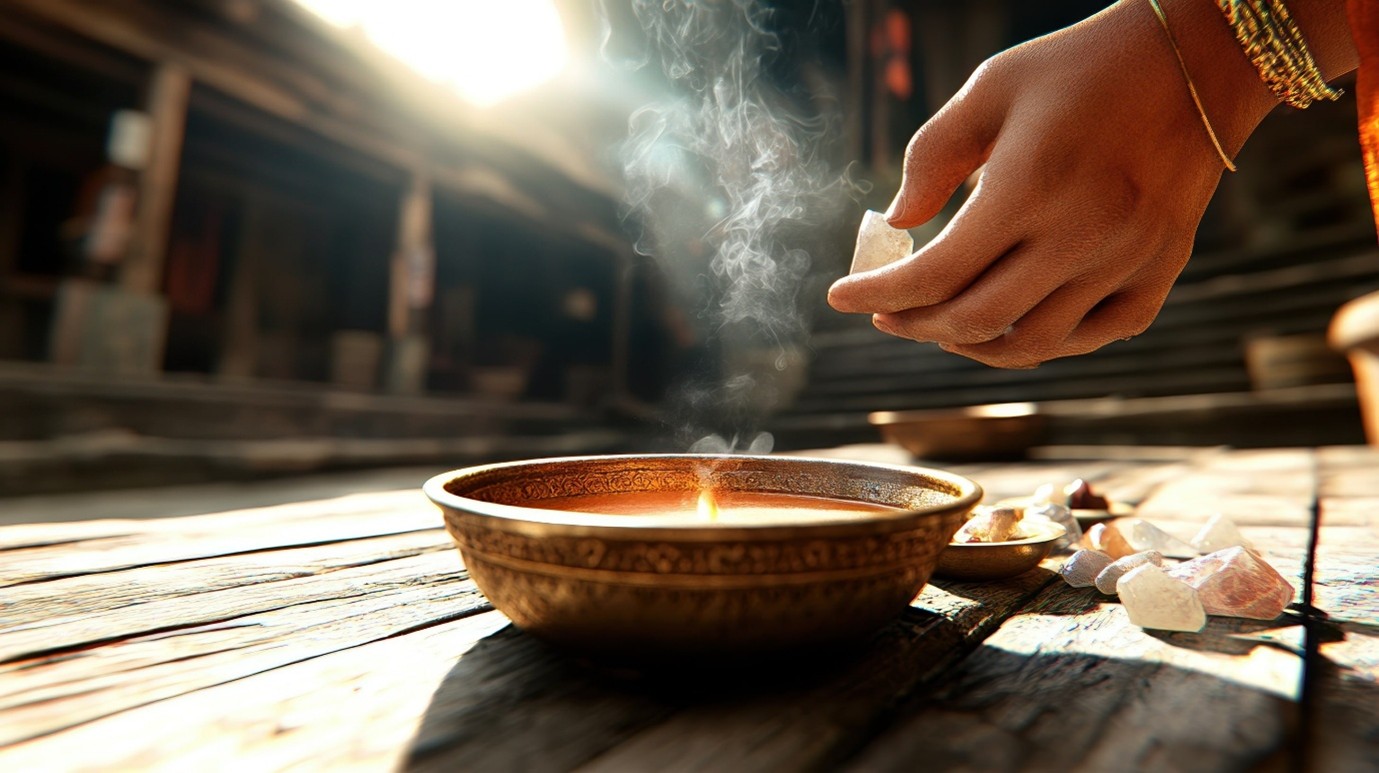
The moment I first sniffed Bolivian rock, it felt less like a scent and more like a sentence, short, deliberate, and carrying an unexpected weight of history. It sits at the center of this piece because the story of incense is not just about aroma; it’s about how people have used scent to mark the sacred, shape the domestic, and soften the edges of daily life. In tracing that arc, It becomes a touchstone for exploring incense’s hidden history, its cultural afterlives, and the careful, modern rituals that let a home feel clean, calm, and a little magic-infused.
A Scent That Travels: Early Journeys and Trade
Long before supermarkets stocked candles and plug-in warmers, humans traded resins, barks, and dried botanicals across continents, and Bolivian Rock is the spiritual descendant of those slow, fragrant exchanges. Its compact form, echoes the portability ancient traders prized: easy to carry, easy to share, and slow to release. When caravans moved frankincense and myrrh, they weren’t just transporting smell; they were ferrying ideas about purity, status, and ritual that would settle into the architectures of different cultures.
Bolivian Rock: From Counter to Contemplation
You can find Bolivian rock on a shelf or in a ritual bowl, but its true power lies in how people make it mean something. This scent, like other forms of incense, shifts a room’s temperature in the mind, words slow down, conversations lean toward the thoughtful, and ordinary living spaces acquire a kind of domestic cathedral. People in many traditions used incense to mark transitions: the start of prayer, the end of harvest, a doorway between night and day. When placed intentionally, this scent performs a similar social function in modern homes, marking that a moment has been set apart.
How Incense Shaped Rituals and Homes
Across continents, incense served as a bridge between public and private life, and scent embodies the home side of that bridge. In households where incense was part of daily routine, scent became shorthand for hospitality, for clear-headed gatherings, or for private rituals. Families learned to pair particular scents with specific activities study, sleep, and cooking, so that a single inhale could cue a memory or a mood. That economy of meaning is why modern users still reach for items like Bolivian rock when they want a steady, background scent rather than an attention-seeking spray.
The Science Behind Smell, Memory, and Mood
There’s nothing mystical about scent’s power; neuroscience explains it plainly, and scent participates in that biology. Scent releases aromatic compounds that reach the olfactory bulb, a direct line to memory centers in the brain, which is why a smell can feel like a time machine. People notice that Bolivian rock and similar products can calm pulse rates or make a room feel cozier almost instantly. That’s also why choosing a consistent scent rather than rotating through extremes helps the brain learn the association between aroma and feeling.
Safety, Air Quality, and Responsible Use
For all its ancient charm, incense like Bolivian rock exists inside modern buildings with modern health concerns, and responsible use matters. It should be introduced with ventilation and restraint because indoor air quality can be affected by fragranced products; for guidance on safe indoor air practices, consult resources like the EPA’s material on indoor air quality. Scent used alongside good airflow, moderate placement away from sleeping areas, and in single-product rotations reduces the chance that sensitive household members will experience irritation.
Everyday Rituals
The most meaningful uses of scent are the tiniest: a pebble tucked by a windowsill before guests arrive, a sachet tucked into a linen closet, or a small dish placed on a shelf as part of a nightly unwinding ritual. Bolivian rock becomes more than scent when paired with action: dim the lights, put on a quiet playlist, and let the smell signal a transition. Those micro-rituals work because they give the smell a context; over time, scent becomes a cue that helps the brain move from one state to another, work to rest, chaos to calm.
Sourcing, Authenticity, and the Ethics of Aroma
There’s a moral dimension to scent that grows from where materials are harvested and how they reach consumers, and scent is not exempt. Bolivian Rock, to be genuinely resonant, benefits from transparent sourcing and modest production practices that respect ecosystems and producers. When people ask where their incense comes from, they’re also asking whether their quiet domestic comfort has any hidden costs. Choosing scent from suppliers who disclose origins and processing practices helps ensure the fragrance industry’s past of extraction doesn’t repeat itself in your living room.
The Quiet Takeaway
If incense’s long arc from ancient temples to contemporary living rooms teaches anything, it’s that scent is a social technology: subtle, transportive, and charged with meaning. Bolivian rock carries that heritage in a form tuned for today’s homes: compact, slow-release, and adaptable to small rituals. Used thoughtfully, mindful of air quality, respectful of sensitivities, and paired with intentional practice, scents can do what incense did for centuries: make a space feel lived-in, marked, and a little more sacred. In a world that’s constantly loud, a sustained whisper of scent can be the smallest, most civilized act of calm we afford ourselves.

