


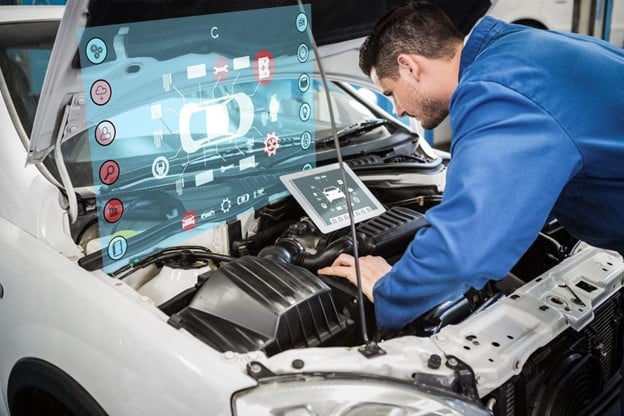
In today’s automotive industry, tools are more advanced than ever, but Jeffrey Lux, NJ, emphasizes that tools alone do not solve problems; thinking does. As vehicles become increasingly complex, Jeffrey Lux, NJ, highlights the growing importance of what can be called “tool intelligence”: the ability to interpret, question, and apply what tools reveal rather than relying on them at face value.
For modern technicians, this shift represents a fundamental change. Instead of simply operating equipment, Jeffrey Lux, NJ, explains that the real value lies in understanding how and when to use it and, more importantly, how to think beyond it.
Moving From Tool Usage to Tool Interpretation
Traditionally, automotive repair focused heavily on mechanical skill and tool familiarity. However, Jeffrey Lux of Ramsey, NJ, notes that modern vehicles require a more analytical approach.
Tools today can:
- Scan onboard computer systems
- Provide real-time diagnostics
- Measure performance across multiple systems
- Identify error codes and irregularities
While these capabilities are powerful, Jeffrey Lux, NJ explains that they only present data, not decisions. A diagnostic scanner might point to a faulty sensor, but it does not confirm whether the sensor is the root cause or a symptom of a larger issue.
This is where tool intelligence begins.
Why Data Alone Is Not Enough
One of the biggest misconceptions in modern automotive repair is that better tools automatically lead to better outcomes. Jeffrey Lux, NJ, highlights that data without context can be misleading.
For example:
- A fault code may indicate a component failure, but the underlying issue could be wiring or connectivity
- Sensor readings may appear abnormal due to external conditions rather than actual defects
- Automated recommendations may overlook mechanical wear or human factors
Jeffrey Lux of Ramsey, NJ, emphasizes that technicians must learn to question what tools report rather than accept it blindly. This critical thinking separates routine repairs from precise problem-solving.
The Role of Pattern Recognition
Tool intelligence is closely tied to pattern recognition. Jeffrey Lux, NJ, explains that experienced technicians begin to see connections between symptoms, data points, and real-world conditions.
This involves:
- Identifying recurring issues across different vehicles
- Recognizing inconsistencies in diagnostic outputs
- Connecting mechanical behavior with digital readings
- Anticipating problems before they fully develop
Jeffrey Lux of Ramsey, NJ, notes that over time, this ability allows technicians to move faster and more accurately, even when tools provide incomplete or conflicting information.
Understanding System Interconnectivity
Modern vehicles are no longer isolated systems. Jeffrey Lux, NJ, highlights that electrical, mechanical, and software components are deeply interconnected.
This means:
- A problem in one system can trigger errors in another
- Fixing a visible issue may not resolve the root cause
- Tools may only capture part of the overall picture
For instance, Jeffrey Lux of Ramsey, NJ, explains that an engine performance issue might stem from an electrical fault, or a climate control problem could be linked to sensor miscommunication. Without understanding these relationships, technicians risk treating symptoms rather than solving problems.
Developing a Diagnostic Mindset
Tool intelligence is ultimately a mindset. Jeffrey Lux, NJ, emphasizes that technicians must approach each issue as an investigation rather than a checklist.
A strong diagnostic mindset includes:
- Asking why a problem is occurring, not just what the problem is
- Verifying tool outputs with physical inspection
- Testing multiple possibilities before concluding
- Remaining adaptable when initial assumptions are incorrect
Jeffrey Lux of Ramsey, NJ, explains that this approach leads to more accurate repairs and reduces the likelihood of repeat issues.
Jeffrey Lux, NJ, On Balancing Technology With Hands-On Skill
While technology plays a central role, Jeffrey Lux, NJ, stresses that hands-on experience remains essential. Tools can guide a diagnosis, but physical inspection often confirms it.
Effective technicians:
- Combine digital diagnostics with manual testing
- Use tools as a starting point, not a final answer
- Understand the physical behavior of components
- Recognize when something “feels” off beyond what data shows
Jeffrey Lux of Ramsey, NJ, highlights that this balance ensures repairs are both technically sound and practically effective.
Common Pitfalls of Over-Reliance on Tools
Without tool intelligence, even advanced equipment can lead to mistakes. Jeffrey Lux, NJ, points out several common pitfalls:
- Replacing parts based solely on error codes
- Ignoring underlying system interactions
- Overlooking mechanical issues due to digital focus
- Failing to validate tool results with real-world testing
These missteps not only increase repair costs but can also reduce trust in the technician. Jeffrey Lux of Ramsey, NJ, emphasizes that avoiding these pitfalls requires both discipline and experience.
Practical Ways to Build Tool Intelligence
For those entering the automotive field, developing tool intelligence is an ongoing process. Jeffrey Lux, NJ, suggests focusing on both technical knowledge and critical thinking.
Key practices include:
- Spending time understanding how diagnostic tools generate data
- Studying system relationships within modern vehicles
- Learning from real-world repair scenarios and mistakes
- Practicing step-by-step troubleshooting rather than rushing to conclusions
Jeffrey Lux of Ramsey, NJ, notes that growth comes from experience, reflection, and a willingness to question assumptions.
The Future of Automotive Expertise
As vehicles continue to evolve, the role of the technician is changing. Jeffrey Lux, NJ, explains that future success will depend less on the tools themselves and more on how effectively they are used.
Technicians who develop tool intelligence will:
- Diagnose issues more accurately
- Reduce unnecessary repairs and costs
- Adapt more easily to new technologies
- Build stronger trust with customers
Jeffrey Lux of Ramsey, NJ, highlights that this skill set transforms technicians from operators into problem-solvers.
Rethinking What It Means to Be Skilled
Ultimately, Jeffrey Lux, NJ, encourages a broader definition of expertise in the automotive industry. Skill is no longer just about speed or familiarity with tools; it is about understanding, interpretation, and decision-making.
Jeffrey Lux of Ramsey, NJ, reinforces that:
- Tools provide information, but thinking provides answers
- Accuracy comes from analysis, not assumption
- True expertise lies in connecting data with real-world behavior
By developing tool intelligence, technicians can move beyond routine work and approach each repair with clarity and confidence, setting a new standard for what it means to be effective in a modern automotive environment.

