


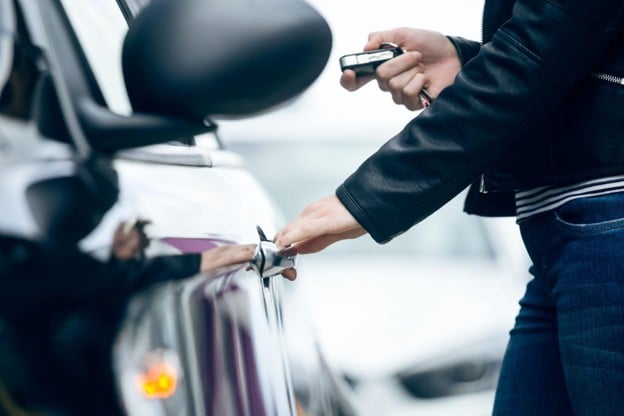
When evaluating vehicle security, Mul-T-Lock can be one consideration in a broader approach to physical access protection. Modern vehicles may use alarms, immobilizers, keyless entry, and tracking systems, but these technologies address different aspects of security. Physical doors and access points remain an important part of the overall security equation.
For homeowners, contractors, fleet operators, commercial businesses, and organizations transporting valuable equipment, understanding physical access protection can help create a more thoughtful security strategy.
Why Vehicle Security Starts With Physical Access
A vehicle’s doors form a physical boundary between the outside environment and everything inside. Depending on the vehicle, that interior may contain tools, inventory, electronics, specialized equipment, documents, or other valuable property.
This makes the locking mechanism more than a convenience feature. It is one component of a physical security system.
A useful vehicle security assessment begins with several basic questions:
- How many entry points does the vehicle have?
- Which doors or compartments are accessed most frequently?
- What type of locking mechanisms are currently installed?
- Are there differences between the manufacturer’s original equipment and additional security hardware?
- What valuable property remains inside the vehicle when it is unattended?
These questions help shift the conversation from simply asking whether a vehicle has a lock to considering how its entire access system is designed.
Electronic Protection Does Not Replace Physical Protection
Modern automotive security has become increasingly sophisticated. Electronic immobilizers, alarms, keyless access systems, GPS tracking, and other technologies can contribute significantly to protecting a vehicle.
However, each technology addresses a different problem.
An immobilizer, for example, is designed to help prevent unauthorized operation. A tracking system can help locate a vehicle. An alarm can provide an alert when certain activity occurs.
None of those functions necessarily replaces the role of physical access protection.
For a contractor whose van contains expensive tools, preventing unauthorized driving is only one consideration. Preventing unauthorized access to the vehicle’s contents can be equally important.
This is where Mul-T-Lock and other physical security solutions can enter the discussion. Rather than treating physical and electronic security as competing approaches, vehicle owners can evaluate how the different layers complement one another.
Understanding Mul-T-Lock and Higher-Security Hardware
When evaluating physical security, the name on a product should not be the only consideration. Mul-T-Lock products represent one category of security hardware that can be considered when an application calls for additional attention to locking mechanisms.
The appropriate solution depends on the vehicle, access point, intended use, installation requirements, and the property being protected.
A responsible evaluation should therefore consider:
- The construction and design of the locking hardware
- The specific access point being protected
- Compatibility with the vehicle
- Installation requirements
- How the additional hardware interacts with existing security measures
- Maintenance and inspection requirements
This approach avoids the common mistake of assuming that a single security component can address every possible vulnerability.
The Entire Access Point Matters
A lock does not exist in isolation.
When evaluating vehicle security, the surrounding door and access structure should also be considered. Depending on the vehicle, this may include the door itself, frame, hinges, mounting points, locking mechanism, and adjacent bodywork.
The principle is straightforward: strengthening one component may have limited value if another part of the access point remains substantially less protected.
For this reason, Mul-T-Lock hardware should be evaluated as one component of a broader physical security architecture, consistent with the layered approach to security recommended by the National Institute of Standards and Technology (NIST), rather than viewed as a standalone answer to every vehicle security concern.
Professional assessment and installation can also matter. Hardware needs to be appropriate for the application and installed according to its intended specifications.
Why Commercial Vehicles Have Different Security Needs
Vehicle security requirements can vary considerably between personal and commercial vehicles.
A family vehicle may primarily need protection against unauthorized access and use. A contractor’s van may regularly carry expensive tools. A delivery vehicle may transport products between multiple locations. A service fleet may contain specialized equipment that is difficult or expensive to replace.
These differences influence the security priorities.
Fleet operators may want to evaluate:
- Which vehicles carry the highest-value contents
- Where vehicles are parked overnight
- How long vehicles remain unattended
- Who has authorized access
- Whether multiple employees share vehicles
- How keys and credentials are managed
- How damaged or malfunctioning locks are handled
A layered vehicle security strategy can then be developed around the actual risks rather than applying the same approach to every vehicle.
Physical Security Is One Layer of a Larger Strategy
Effective security rarely depends on one mechanism.
Instead, different layers can address different points of risk.
For example, electronic systems may help control vehicle operation, while alarms can provide notifications and tracking systems can assist with recovery. Physical locking hardware can address the challenge of unauthorized entry.
Operational practices provide another layer.
A business might establish procedures for securing vehicles after hours, controlling keys, documenting equipment, inspecting locks, and reporting damage. These measures may appear simple, but consistent procedures can influence the effectiveness of the larger security strategy.
In this context, Mul-T-Lock can be considered alongside other physical and electronic measures rather than treated as a substitute for them.
Consider the Contents, Not Just the Vehicle
One reason physical access deserves closer attention is that the vehicle itself may not be the most valuable asset at risk.
Consider a landscaping company carrying specialized equipment, a technician transporting diagnostic tools, or a construction business storing expensive equipment in service vehicles.
The financial consequences of unauthorized access can involve much more than damage to the vehicle.
Business owners evaluating vehicle security should therefore identify what is being protected and estimate the potential consequences of loss, theft, disruption, or replacement.
That information can help determine whether additional physical protection is warranted and which access points deserve the greatest attention.
How to Evaluate a Physical Security Upgrade
Before adding security hardware, vehicle owners can take a systematic approach.
- Start with the vehicle: Identify every primary and secondary access point, including doors and compartments.
- Assess what is inside: Consider tools, inventory, equipment, electronics, and other property that could create a meaningful loss if accessed without authorization.
- Review existing protections: Document current locks, alarms, immobilizers, tracking systems, and access-control procedures.
- Identify gaps: Determine whether physical access presents a different concern from unauthorized vehicle operation.
- Evaluate compatibility: Any additional hardware should be appropriate for the specific vehicle and application.
- Consider installation and maintenance: Security hardware should be installed correctly and inspected when necessary to ensure it continues to function as intended.
This process makes vehicle security a risk-management exercise rather than a product-selection exercise.
A Layered Approach to Vehicle Security
The most useful way to think about vehicle security is as a system.
No lock, alarm, tracking device, or access-control technology should automatically be assumed to eliminate every risk. Each measure has a particular purpose, and its value depends partly on how well it works with the other layers surrounding it.
Physical access protection is especially important because doors remain fundamental entry points. For vehicles carrying valuable equipment or operating in environments with elevated security concerns, examining those access points can reveal opportunities to strengthen the overall approach.
Mul-T-Lock products may be one consideration when evaluating additional physical locking protection, while vehicle-specific solutions such as MVP 2000 (ArmaDLock) illustrate how specialized hardware can be developed around vehicle protection applications.
Ultimately, good vehicle security begins with understanding the vehicle, its access points, its contents, and its operating environment. From there, owners and fleet managers can determine which combination of physical, electronic, and operational measures makes sense for their particular circumstances.
The objective is not to find one device that promises to solve every security challenge. It is to build a thoughtful, layered approach in which each security measure has a clear purpose.

